


Professional Presentation Skills Program
Most people present. Few people command.
The Sharp Deck is a cohort-based presentation skills program for professionals and students who need to present with clarity and control — whether you're pitching to executives, defending a thesis, training a team, or stepping into your first professional role.

You know your material. So why doesn't it land?
Most professionals receive zero formal presentation training after leaving school.
The average executive presentation loses its audience within 4 minutes - structure fails, not content.
Practicing alone doesn't build the skill. A rigorous cohort does.
Most presentation training teaches you how to speak. It doesn't teach you how to be heard.
The result? Professionals who know their subject inside out — but lose the room the moment they open a slide deck. Students who have the ideas but not the delivery. Teams whose recommendations get deferred because they couldn't make the case clearly enough to move a decision-maker.
Presenting well isn't a personality trait. It's a skill. And like every skill, it requires structured practice, honest feedback, and a system designed to build it deliberately.
The Informer
Complex information to mixed audiences. Master data storytelling and structure to ensure your message is understood and retained.
The Trainer
Learning that transfers. Instructional design for educators and L&D to create high-impact training that sticks.
A curriculum built for how professionals actually present.
The Sharp Deck is a cohort-based professional development program inspired by the Toastmasters model, but redesigned from the ground up for workplace presenters, not public speakers. Members work through a structured five-level curriculum across four specialized tracks, delivering real presentations to a peer cohort that gives them the kind of specific, honest feedback most professionals never receive.
The Sharp Deck Program
The Persuader
Moving decision-makers to act. Develop business cases and master Q&A to influence outcomes and secure buy-in.
The Executive Communicator
Highest stakes. Master compression, authority, and composure to command the room with confidence and power.
5
Levels . Foundation to Mastery
28
Project Briefs. Full Catalog
90
Minutes. Every Session
8
Evaluation
Dimensions
This program is for you if any of these are true.

[01]
[02]
[03]
[04]
[05]
[06]
You're a professional who presents to teams, clients, or leadership and know you're not as sharp as you need to be.
You're a student preparing for college, job interviews, internship presentations, graduate defenses, or any high-stakes academic moment.
You're an educator or trainer whose job is to make learning stick.
You're a senior leader whose credibility depends on how you show up in the room.
You've taken presentation training before and walked away with nothing - theory without practice.
You want honest peer feedback, not encouragement disguised as coaching.
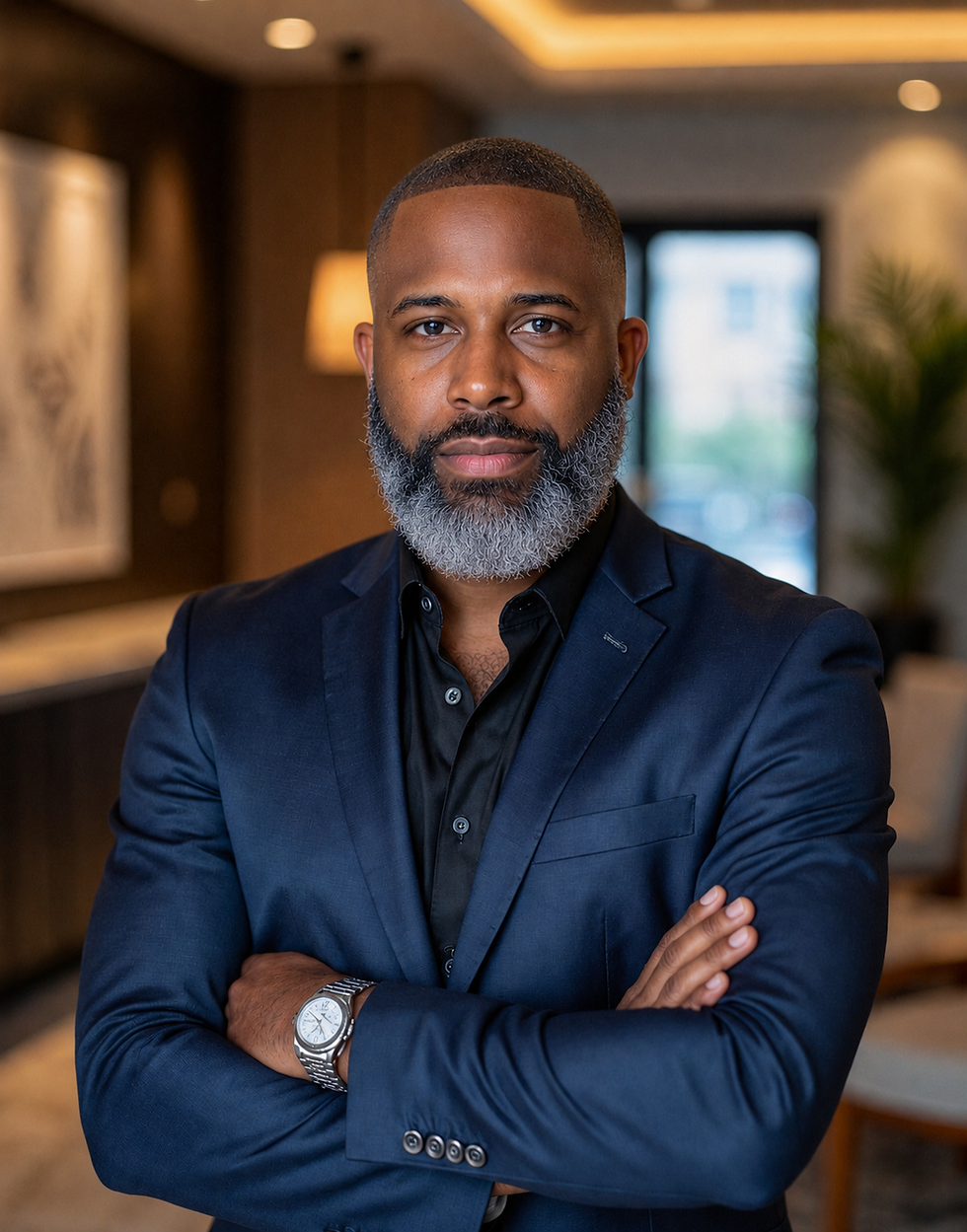
The first time I presented professionally, I faced the board, read my slides word for word, and logged 78 filler words in 15 minutes. I was not nervous, I genuinely did not know what I was doing wrong. Nobody had ever taught me.
The United States Air Force fixed that. I went through six months of rigorous intelligence briefing training, the kind designed to prepare analysts to brief General officers on high-stakes, sensitive information where there is no margin for error and no tolerance for confusion. They did not encourage me. They took apart every presentation I gave, in front of my peers, until I understood exactly what was failing and why. It was humbling. It was also the most valuable professional development of my career.
What I learned was not how to speak. It was how to transfer understanding under pressure, to any audience, at any stakes, in any room.
That skill propelled everything that came after. Including a 5-minute pitch to an Executive Director that earned one word of feedback: "WOW." The program I pitched that day, the HRL Consulting Training Team, went on to be publicly recognized by the Secretary of Veterans Affairs.
When I built that team, I added an impromptu presentation to the interview process. Of the 12 people I needed to hire, only 3 were ready to present publicly that day. I hired all 12, and told the other 9 directly: if you trust my feedback and commit to getting better, you will. They did. Every one of them.
The Sharp Deck exists because that process worked, and because most professionals never get the kind of rigorous, honest development environment that changed everything for me. This program is that environment, built for the professional world.
Derrick J. Cooley, MPA
Founder, The Sharp Deck · Author, Leading Through Chaos · 20 Year Federal Government Professional
-
US Air Force Intelligence Briefing Training
-
Master of Public Administration
-
Author · Leading Through Chaos
-
Founder · HRL Consulting Training Team
-
Recognized by the VA Secretary of Veterans Affairs
I had 78 ums
in 15 minutes.
Here is what changed.
The Person Behind the Program
1:1 Coaching with Derrick J. Cooley
The same standard
that changed my career.
Applied to yours.
The Sharp Deck cohort gives you structured practice and peer feedback. One-on-one coaching gives you something more direct, a focused, personalized engagement built around your specific presenting challenges, your audience, and your stakes.
I was trained by the United States Air Force to brief General officers on sensitive, high-consequence information. I built and led a consulting training team recognized by the Secretary of Veterans Affairs. I have coached professionals from unprepared to performance-ready in environments where the margin for error was zero.
That standard, rigorous, honest, specific, is what you get in a coaching engagement. Not encouragement. Development.
-
You have a high-stakes presentation coming up and need focused preparation, not a course
-
You are a federal professional who presents to senior leadership and knows the standard is different
-
You want honest, specific feedback from someone who has operated at the level you are trying to reach
-
You need results on a timeline that a cohort program cannot match
What a coaching engagement covers
Session 1 Diagnostic. You present. I evaluate across all 8 dimensions. We identify your two or three most critical gaps.
Sessions 2–4 Targeted skill development. Each session works on a specific gap with deliberate practice and honest feedback.
Sessions 5–6 Applied practice. You present your real material, the actual presentation you are preparing for, and we sharpen it.
Throughout Written evaluation after every session. Specific, documented, traceable progress.
Common Questions
How is The Sharp Deck different from Toastmasters?
Toastmasters is built around speeches and public speaking. The Sharp Deck is built for professional presentations — slide decks, executive audiences, business cases, and training delivery.
Who is this for?
Anyone who presents as part of their work or education — from students preparing for internships and interviews, to analysts presenting data, to managers making cases to leadership, to educators delivering training. If presenting is part of how you're evaluated or how you advance, there's a track for you.
How does the cohort work?
Groups of 10–20 meet for 90-minute sessions with live presentations, peer evaluations, and skill exercises. Members progress through five levels with an assigned mentor.
Do I need experience?
No. Level 1 starts with fundamentals. Every member begins there.
Can organizations enroll teams?
Yes. Corporate cohort programs available. Use the contact form.
When does the next cohort start?
Our first cohort is a free pilot launching in October, limited to 10 members. We're selecting participants by application to build a strong mix across all four tracks. Apply by September 30 to be considered.